Research Article | DOI: https://doi.org/ 10.31579/2768-0487/008
1Advisor in Pediatrics and Pediatric Psychiatry, Children Teaching Hospital of Baghdad Medical City, Head, Iraq Headquarter of Copernicus Scientists International Panel, Baghdad, Iraq.
*Corresponding Author: Aamir Jalal Al Mosawi, 1Advisor in Pediatrics and Pediatric Psychiatry, Children Teaching Hospital of Baghdad Medical City, Head, Iraq Headquarter of Copernicus Scientists International Panel, Baghdad, Iraq.
Citation: Aamir Jalal Al Mosawi. (2021) Trump’s covid-19 treatment: Can we offer it to other patients in the world. Journal of Clinical and Laboratory Research. 2(2) DOI: 10.31579/2768-0487/008
Copyright: ©2021 Aamir Jalal Al Mosawi. This is an open-access article distributed under the terms of the Creative Commons Attribution License, which permits unrestricted use, distribution, and reproduction in any medium, provided the original author and source are credited.
Received: 08 February 2021 | Accepted: 19 February 2021 | Published: 25 February 2021
Keywords: Trump’s covid-19; evidence-based therapies; medical ethics
Background: Covid-19 is a viral illness caused by severe acute respiratory syndrome coronavirus 2 (SARS-CoV-2). The disease was first reported during December, 2019, in Wuhan, Hubei in China. On Thursday, the first of October 2020, the White House of the USA declared that the president of the USA, Donald Trump had a positive test for SARS-CoV-2. He initially had mild symptoms which included mostly, hoarseness, lethargy, and fatigue. The treatment received by a patient “Donald Trump” who was considered the most powerful person in the world is studied, and this paper assumed that all the patients in the world are as important as Mr. Trump and tries to offer the best evidence-treatment for them.
Patients and methods: Most media including the CNN television channel rightly confirmed that Mr. Trump has been treated by the best doctors in the world with best therapies that could possibly help him in defeating the virus. The CNN, in various programs during the first week of October, emphasized that, American citizens with Covid-19 are not receiving the same treatments as their president Donald Trump. Results: Trump aged 74 years and initially had mild symptoms which included mostly, hoarseness, lethargy, and fatigue. His age, obesity and mildly elevated cholesterol were considered risk factors that may reduce the likelihood of having very favorable outcome. It was reported that he initially took hydroxychloroquine, an anti-malarial drug. The use of a therapeutic approach including experimental antibody therapy, remdesivir and dexamethasone has not been reported as a treatment for one patient before other than Mr. Trump. Obviously, of the three important therapies, only dexamethasone can be offered to almost all the patients with covid-19.
Conclusion: It seems that, the most important factors that made treatment of Donald Trump effective and successful are:
1-The early institution of therapy regardless of the generally accepted recommendations.
2-The use of multiple drugs as none of the available drug alone can guarantee successful treatment.
Covid-19 is a viral illness caused by severe acute respiratory syndrome coronavirus 2 (SARS-CoV-2). The disease was first reported during December, 2019, in Wuhan, Hubei in China [1, 2, 3].
There are four genera of coronaviruses including alpha-coronaviruses, beta-coronaviruses, gamma-coronaviruses, and delta -coronaviruses. Alpha and beta-coronavirus can infect mammals, while gamma-coronavirus and delta-coronavirus generally infect birds.
Four coronaviruses are known to cause mild upper respiratory infection in humans of all ages including infants. The transmission of coronaviruses from animals (birds) to causes respiratory illness has been reported as early as 1969 by Kapikian et al. Community-wide outbreak associated with 229E-like coronavirus has be reported as early as 1970 by Cavallaro and Monto. Until December, 2020, two beta-coronaviruses (SARS coronaviruses and MERS-coronaviruses were known to cause severe, potentially fatal pneumonia-like illness [1-6].
Errors in the replication of viral genomic RNA of zoonotic coronaviruses led to the emergence of genetically related diverse quasi-species, while the transmission of some of them to a new host species led to the emergence of human severe acute respiratory syndrome coronavirus (SARS-CoV) and Middle East respiratory syndrome coronavirus (MERS-CoV). SARS-CoV emerged for the first time in Guangdong China in 2002 spread rapidly to many other counties causing more than 8000 cases with about10% mortality. In 2012, it was thought that MERS-CoV was transmitted to humans from bats through an intermediate camel host leading to 1700 cases in 27 countries with about 40% mortality [1-6].
The disease has rapidly became a worldwide pandemic, and according to the live online update available at https:// www.worldometers.info/coron avirus/ , on the 6th of October, 2020, The disease affected more than 35.5 million person throughout the world, and was associated with more than 1.04 million deaths. In a country like Iraq, many doctors died from covid-19 and persons whom were considered to be healthy and possibly having a good immunity like former football players and a bodybuilding champion [7]
The incubation period of the disease is from one day to fourteen days. The disease is commonly associated with fever, cough, fatigue, shortness of breath or breathing difficulties, and loss of smell and taste [7].
Although, most patients have mild symptoms, some patients experience acute respiratory distress syndrome possibly that is generally attributed to cytokine storm. Severe disease can be complicated by septic shock, vascular thrombosis and multi-organ failure [1, 2, 3].
Patients can infect others two days before the symptom onset and the disease can be transmitted from asymptomatic persons. Patients may remain infectious for seven to twelve days in moderate cases and up to two weeks in severe cases. The standard method for diagnosing the disease is real-time reverse transcription polymerase chain reaction (rRT-PCR) from a nasopharyngeal swab [4, 5, 6].
SARS-CoV-2 has already defeated the efforts to prevent its spread and caused probably the most global pandemic in history. SARS-CoV-2 continued to infect people and to take lives without the emergence of a treatment that is confirmed to have clinically a significant effectiveness in clinical treatment. The rational scientific approach to face a potentially fatal viral pandemic with no known effective specific therapies dictate the early use of all the useful preliminary research evidence with prioritizing emphasis on safety to avoid making more harm than good in such situation[4,5,6].
The treatment received by a patient “Donald Trump” who was considered the most powerful person in the world is studied, and this paper assumed that all the patients in the world are as important as Mr. Trump and tries to offer the best evidence-treatment for them.
On Thursday, the first of October 2020, the White House of the USA declared that the president of the USA Donald Trump, his wife, and other White House officials had a positive test for SARS-CoV-2.
He aged 74 years and initially had mild symptoms which included mostly, hoarseness, lethargy, and fatigue. His age, obesity and mildly elevated cholesterol were considered risk factors that may reduce the likelihood of having very favorable outcome. It was reported that he initially took hydroxychloroquine, an anti-malarial drug.
In fact, during May, 2020 Mr. Trump reported that he has taken a two-week-long preventive dose of hydroxychloroquine. On Friday, Trump developed fever, marked fatigue, difficulty in breathing with some lowering of oxygen saturation, a treatment with Regeneron’s experimental cocktail of two monoclonal antibodies, and remdesivir (a five-day course) was started. He received 8 g intravenous infusion of Regeneron’s mixture, which is the highest dose used in the treatment of 245 individual in an unpublished clinical trial conducted by Regeneron. Regeneron’s antibodies were used to treat non-hospitalized patients to augment the immune response, and possibly reduce viral load.
Trump was Hospitalized for three days at Walter Reed National Military Medical Center, and left the hospital on Monday night. On Saturday, Trump needed supplemental because of the lowered oxygen saturation and he was given two doses of dexamethasone. On the second of October, Trump’s doctors also reported that he was also receiving daily aspirin, melatonin, zinc, and famotidine.
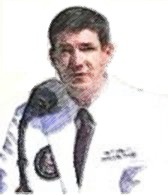
Most media including the CNN television channel rightly confirmed that Mr. Trump has been treated by the best doctors in the world with best therapies that could possibly help him in defeating the virus. Dr Sean Conley (Figure-1) was probably the most important doctor who was in charge of the treatment of Mr. Trump.
In addition, the CNN, in various programs during the first week of October, emphasized that, American citizens with Covid-19 are not receiving the same treatments as their president Donald Trump.
The use of a therapeutic approach including experimental antibody therapy, remdesivir and dexamethasone has not been reported as a treatment for one patient before other than Trump.
Assuming that Mr. Trump is an ordinary man in this world, we will find, and that of the three medications that are considered most important, only dexamethasone can be offered to almost all the patients with covid-19 throughout the world.
However, other medications, he received such as famotidine and melatonin are also generally available for most people in the world or can be easily available for most people.
Before Trump was tested positive, and considering him at a high risk, he received oral hydroxychloroquine as a preventive measure. Trump was possibly also receiving hydroxychloroquine very early during the time when tested positive for SARS-CoV-2.
However, because of the potential occurrence of side effect that demands regular medical supervision, we recommend the use of oral azithromycin 500 mg tablets daily as a preventive measure.
For positive asymptomatic patients, we recommend the use of oral azithromycin 500 mg twice daily or oral azithromycin 500 mg tablets daily plus low dose oral hydroxychloroquine 200 mg once daily. For patients with positive test who have mild symptoms, it will be useful to add melatonin 5 mg at night which will probably help with symptomatic control of cough and possibly help in the prevention of the cytokine storm.
When Trump developed the symptom of fever and difficulty of breathing treatment with remdesivir and Regeneron’s antibody mixture was rapidly instituted before hospitalization. These two medications are generally not available for most patients throughout the world at this stage of illness.
Therefore, if Trump was an ordinary man in this world we recommend the following therapies at this stage:
1-Intravenous or intramuscular Teicoplanin in the doses suggested by Sato et al (2006) [4, 5, 6]. A loading dose of 400 or 800 mg can be given on the first day, followed by maintenance dose of 400mg.
2-Oral azithromycin 500 mg twice daily.
3-Oral Famotidine.
4-Oral melatonin 5 mg daily at night.
5-Low dose of hydroxychloroquine 200mg can also be considered in patients with health hearts.
6-Dexamethasone can be given based on the clinical judgment.
Dr. Sean Conley said “Trump has also received dexamethasone, a cheap and widely available corticosteroid that can reduce inflammation. But it also suppresses the immune system, so it's generally not recommended for Covid-19 patients unless the situation is severe”.
Trump’s was given Regeneron antibody mixture despite there was no published study describing its use. However, Regeneron press reported that experiments using golden hamsters and rhesus macaques that were intentionally infected with SARS-CoV-2 were associated with reduction of the viral levels and disease pathology. Regeneron reported that in an ongoing unpublished clinical trial in individuals (asymptomatic or have moderate) who tested positive for SARS-CoV-2, Antibody treatment reduced viral load and shortened symptomatic disease in patients who did not have SARS-CoV-2 antibodies at the initiation of the study. It was not possible to enroll Trump in the ongoing unpublished clinical trial because, it randomly assigns half the participants to receive the antibodies; while the other half of the patients are enrolled in the control group and receive infusions of an inactive placebo [7].
The United States Food and Drug Administration (FDA) regulation allows minor expanded access experimental treatments and treating physicians need to request what is called “A compassionate use” of an investigational new drug for individual patients or for emergencies [7].
Remdesivir is a drug that can be given intravenously and not orally. It has an anti-viral against several RNA viruses. It has an in vitro antiviral activity against filoviruses, arenaviruses, and coronaviruses including circulating human coronaviruses HCoV-OC43, HCoV-229E, SARS, and MERS zoonotic coronaviruses. Remdesivir (GS-5734) is a monophosphoramidate prodrug of an adenosine analogue that is activated intra-cellularly to the main metabolite in plasma “GS-441524” which acts mainly by interfering with the action of viral RNA-dependent RNA polymerase and escapes proofreading by viral exoribonuclease resulting reducing in viral RNA replication [1-8].
Warren et al (2016) reported that remdesivir has an antiviral activity against multiple variants of Ebola virus and other filoviruses in cell-based assays. Nonhuman primates receiving intravenous remdesivir had persistent nucleoside triphosphate levels in peripheral blood mononuclear cells (half-life:14 hours) and distribution to sites of viral replication in the testes, eyes, and brain. In a rhesus monkey model of Ebola virus disease, once-daily remdesivir intravenous administration of 10 mg/kg for 12 days was associated with a great suppression of Ebola virus replication and therefore protected 100% of Ebola virus-infected animals against fatal disease. Treatment also improved the clinical and pathophysiological markers, even when treatments were started three days after virus exposure when systemic viral RNA was detected in two out of six treated animals. Warren et al suggested that remdesivir important post-exposure protection against Ebola virus disease in nonhuman primates [9].
Sheahan et al (2017) showed that remdesivir can inhibit SARS-CoV and MERS-CoV replication in multiple in vitro systems, including primary human airway epithelial cell cultures with submicromolar IC50 values. Remdesivir can also inhibit bat CoVs, pre-pandemic bat CoVs, and circulating contemporary human CoV in primary human lung cells. In a mouse model of SARS-CoV pathogenesis, prophylactic and early therapeutic administration of remdesivir considerably decreased lung viral load and was associated with clinical improvement and also improved respiratory function [8].
Agostini et al (2018) reported that remdesivir can effectively inhibit human and zoonotic coronaviruses in vitro and in a severe acute respiratory syndrome coronavirus (SARS-CoV) mouse model. They also showed that remdesivir can inhibit murine hepatitis virus (MHV) with similar 50
It seems that, the most important factors that made treatment of Donald Trump effective and successful are:
1-The early institution of therapy regardless of the generally accepted recommendations.
2-The use of multiple drugs as none of the available drug alone can guarantee successful treatment.
Assuming that all patients in the world are as important as Mr. Trump and offering them the best evidenced-based therapies as early as possible.
We recommend the use of oral azithromycin 500 mg tablets daily as a preventive measure for high risk individuals.
We recommend the use of oral azithromycin 500 mg twice daily or oral azithromycin 500 mg tablets daily plus low dose oral hydroxychloroquine 200 mg once daily for asymptomatic patients who tested positive.
For patients with positive test who have mild symptoms, it will be useful to add melatonin 5 mg at night which will probably help with symptomatic control of cough and possibly help in the prevention of the cytokine storm.
For patients with difficulty in breathing who don’t have the access to treatment with remdesivir and Regeneron’s antibody mixture, we recommend early use of the following therapies at this stage:
1-Intravenous or intramuscular Teicoplanin in the doses suggested by Sato et al (2006) [4, 5, 6, 7]. A loading dose of 400 or 800 mg can be given on the first day, followed by maintenance dose of 400mg.
2-Oral azithromycin 500 mg twice daily.
The sketch in figure-1 was published before in our previous publication and the author has their copyright.
Non
Dear Editorial Team, Clinical Medical Reviews and Reports. My experience with the journal was highly positive. The peer-review process was rigorous, constructive, and completed in a timely manner. The reviewers provided valuable comments that helped improve the quality and clarity of our manuscript. The editorial office was professional, responsive, and supportive throughout all stages of the publication process. Communication was clear and efficient, and any questions were addressed promptly. Overall, I found the journal to maintain high scientific standards and an excellent publication workflow. I would be pleased to consider submitting future work to this journal. Best wishes from, Elena Popa.

It was my pleasure to submit my testimonial concerning the Reviewer Board of our Scientific Journal “Brain and Neurological Disorders”. The Reviewers focused on some modifications and their contribution was helpful. The ladies of our Editorial Office were also supported my efforts. It was my honor to have such a co-operation and I am looking forward for more collaboration.

Dear Grace Pierce, Editorial Coordinator of Journal of Clinical Research and Reports, Thank you for the speedy and efficient peer review process. I appreciate the fact that your peer reviewers do not take months to respond like with some other journals. I would also like to thank the editorial office for responding quickly to my questions. It is an excellent journal. I plan to submit more manuscripts in the future. Best wishes from, Robert W. McGee

Dear Grace Pierce, Editorial Coordinator of Journal of Clinical Research and Reports, Working with you and your team on our recent publication in JCRR has been a truly wonderful and enjoyable experience. The responses were prompt, and the reviewers were patient, constructive, and highly professional. One reviewer in particular gave me the feeling that a professor was carefully reading and commenting on my coursework, which was deeply touching. The entire process was straightforward and hassle‑free, with no tedious online forms to complete. I highly recommend this journal. Best wishes from, DR Aibing Rao, Head of R&D

I Appreciate the Opportunity to Share my Experience with the Journal of Clinical Research and Reports. The peer review process was timely and constructive, and the feedback provided helped improve the quality of our manuscript. The editorial office was professional, responsive, and supportive throughout the process, ensuring smooth communication and efficient handling of the submission. Overall, it was a positive experience collaborating with your team.

Dear Mercy Grace, Editorial Coordinator of Obstetrics Gynecology and Reproductive Sciences, We would like to express our gratitude for your help at all stages of publishing and editing the article. The editors of the magazine answer all the necessary questions and help at every stage. We will definitely continue to cooperate and publish other works in the Obstetrics Gynecology and Reproductive Sciences! Best wishes from, Alla Konstantinovna Politova,