Research Article | DOI: https://doi.org/10.31579/2641-5194/005
Department of Gastroenterology, Bomma college pharmacy, khammam, India.
*Corresponding Author: Garrepalli samatha. Department of Gastroenterology, Bomma college pharmacy, khammam, India.
Citation: Garrepalli samatha, Uma Rani. G, Fenofibrate Niosomes by Modified Ether Injection Method- of Proper Diet to Help Lower “Bad" Cholesterol and Fats, J. Gastroenterology Pancreatology and Hepatobilary Disorders. 2(1). DOI: 10.31579/2641-5194/005
Copyright: © 2018 Garrepalli samatha. This is an open-access article distributed under the terms of the Creative Commons Attribution License, which permits unrestricted use, distribution, and reproduction in any medium, provided the original author and source are credited.
Received: 22 September 2018 | Accepted: 19 October 2018 | Published: 07 November 2018
Keywords: fenofibrate niosomes; ether injection method; proper diet
The quest never ends. From the very beginning of the human race the quest is going on for newer and better alternatives and in case of drugs it will continue till we find a drug with maximum efficacy and no side effects. Many drugs, particularly chemotherapeutic agents, have narrow therapeutic window and their clinical uses are limited and compromised by dose limiting toxic effect. Thus, the therapeutic effectiveness of the existing drugs is improved by formulating them in an advantageous way.
In the past few decades, considerable attention has been focused on the development of new drug delivery system (NDDS). The NDDS should ideally full fill two prerequisites. Firstly, it should deliver the drug at a rate directed by the needs of the body, over the period of treatment. Secondly, it should channel the active entity to the site of action. Conventional dosage forms including prolonged release dosage forms are unable to meet none of these. At present, no available drug delivery system behaves ideally, but sincere attempts have been made to achieve them through various novel approaches in drug delivery1. Approaches are being adapted to achieve this goal, by paying considerable attention either to control the distribution of drug by incorporating it in a carrier system, or by altering the structure of the drug at the molecular level, or to control the input of the drug into the bio environment to ensure an appropriate profile of distribution.
Novel drug delivery system aims at providing some control, whether this is of temporal or spatial nature, or both, of drug release in the body. Novel drug delivery attempts to either sustain drug action at a predetermined rate or by maintaining a relatively constant, effective drug level in the body with concomitant minimization of undesirable side effects. It can also localize drug action by spatial placement of controlled release systems adjacent to, or in the diseased tissue or organ or target drug action by using carriers or chemical derivatization to deliver drug to particular target cell type.
Vesicular systems-A Review
In recent years, vesicles have become the vehicle of choice in drug delivery. Lipid vesicles were found to be of value in immunology, membrane biology, diagnostic techniques and most recently, genetic engineering7-9. Vesicles can play a major role in modeling biological membranes and in the transport and targeting of active agents. Encapsulation of a drug in vesicular structures can be predicted to prolong the existence of the drug in systemic circulation and perhaps, reduces the toxicity if selective uptake can be achieved10. The phagocytic uptake of the systemic delivery of drug loaded vesicular delivery system provides an efficient method for delivery of drug directly to the site of infection, leading to reduction of drug toxicity with no adverse effects. Vesicular drug delivery reduces the cost of therapy by improved bioavailability of medication, especially in case of poorly soluble drugs. They can incorporate both hydrophilic and lipophilic drugs. These systems delay drug elimination of rapidly metabolizable drugs and function as sustained release systems and solve the problems of drug insolubility, instabilityand rapid degradation. Consequently, a number of vesicular delivery systems such as liposomes,transfersomes, pharmacosomes, niosomesetc, were developed.
Liposomes are simple microscopic vesicles in which lipid bilayer structures are present with an aqueous volume entirely enclosed by a membrane, composed of lipid molecule. There are a number of components present in liposomes, with phospholipid and cholesterol being the main ingredients. The type of phospholipids includes phosphoglycerides and sphingolipids and together with their hydrolysis products.
Niosomes or nonionic surfactant vesicles are microscopic lamellar structures formed on admixture of nonionic surfactant of the alkyl or di alkyl polyglycerolether class and cholesterol with subsequent hydration in aqueous media. In niosomes, the vesicles forming amphiphile is a nonionic surfactant such as span 60 which is usually stabilized by addition of cholesterol and small amount of anionic surfactant such as dicetyl phosphate.Niosomes can entrap both hydrophilic and lipophilic drugs, either in aqueous layer or in vesicular membrane made of lipid materials. It is reported to attain better stability than liposomes. It can prolong the circulation of the entrapped drugs. Because of the presence of nonionic surfactant with the lipid, there is better targeting of drugs to tumour, liver and brain.
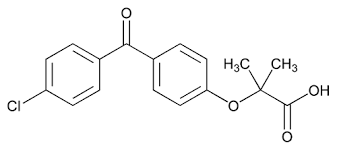
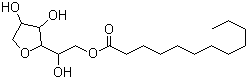
Analytical methods reported for fenofibrate
Fenofibrate is a non steroidal antiinflammatory drug with good analgesic and antirheumatic properties. Chemically it is [[[2-[(2, 6-Dichlorophenyl) amino] phenyl] acetyl] oxy] acetic acid. It is used in various pain conditions like rheumatoid arthritis, osteoarthritis and ankylosing spondylatis. It is of ficial in British Pharmacopoeia. Several analytical techniques like titrimetric, colourimetric,spectroflurimetric ,densitometric,HPLC, RP-HPLC, spectrophotometric and stripping voltametric have been reported for the estimation of fenofibrate.
Zawilla et al studied three sensitive and reproducible methods for quantitative determination of fenofibrate in pure form and in pharmaceutical formulation are presented. The first method is based on the reaction between the drug via its secondary aromatic amino group and p-dimethyl amino cinnamaldehyde (PDAC) in acidified methanol to give a stable coloured complex after heating at 75°C for 20 min. Absorption measurements were carried out at 665.5nm. Beer’s law is obeyed over concentration range 20-100µ g/ml with mean recovery 100.33±0.84. The other two methods are high performance liquid chromatography (HPLC) and densitometric methods by which the drug was determined in the presence of its degradation products over concentration range of 20-70ng/ml and 1-10ng/spot and mean recoveries are 99.59±0.90 and 99.45±1.09 respectively.
Rohit Shah et al developed a new, precise and simple UV spectrophotometric method for the estimation of fenofibrate from tablet formulation. The drug obeyed the Beer’s law and showed good correlation.
Preparation of niosomes
Modified Ether Injection process: Niosomes containing fenofibrate were prepared by modified ether injection technique using nonionic surfactants (spans and tweens) and cholesterol at different concentrations. Cholesterol and surfactant were dissolved in 6ml diethyl ether mix Ether Injection values with 2ml methanol which previously containing weighed quantity of fenofibrate. Then, the resulting solution was slowly injected using microsyringe at a rate of 1ml/min into 15 ml of hydrating solution (phosphate buffer pH 7.4).The solution was stirred continuously on magnetic stirrer and temperature is maintained at 60-65ºC. As the lipid solution was injected slowly into aqueous phase, the differences in temperature between phases cause rapid vaporization of ether results in spontaneous vesiculation and formation of niosomes.
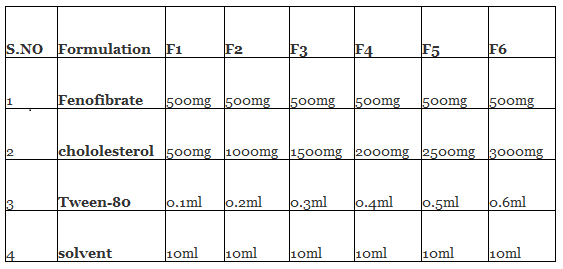
FORMULATION OF FENOFIBRATE NIOSOMES:
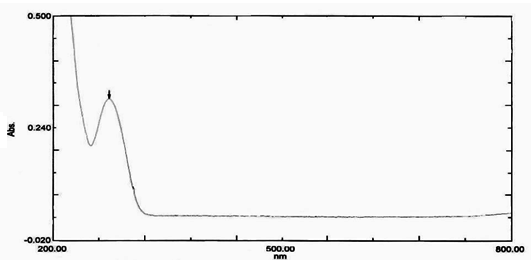
Determination of absorption maxima: Absorption maxima or the wavelength at which absorption takes place. For accurate analytical work it is important to determine the absorption maxima of the substance under study.
Method: UV method
Equipments: UV-VIS spectrophotometer
100mg of fenofibrate was dissolved in 100ml dried methanol. 1ml of this solution was pipetted out in separate volumetric flask and diluted with phosphate buffer 7.4 and subjected for UV scanning in the range of 200-800 using Double beam UV-VIS spectrophotometer, (pharmaspec-1700,shimadzu, japan). The absorption maxima obtained at 274 with a characteristic peak (figure 1)
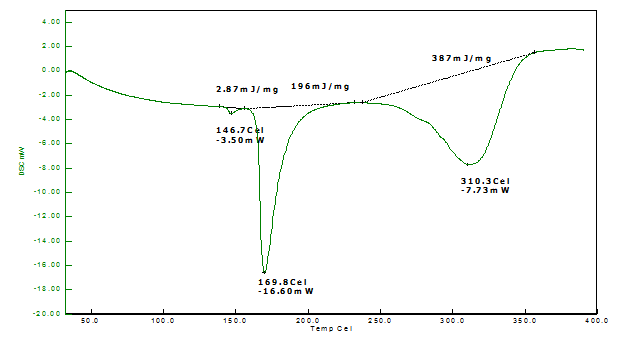
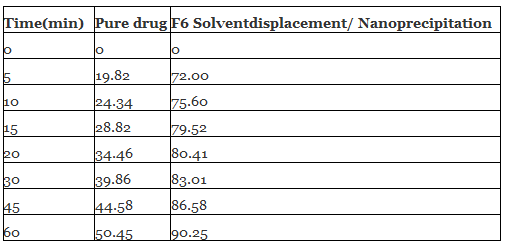
Niosomes containing fenofibrate were conveniently prepared by modified ether injection technique using nonionic surfactants (tween 80) and cholesterol at different concentrations.
All the niosome formulations were subjected for entrapment efficiency and the results shows that as the concentration of surfactant increases the entrapment efficiency increases tween 80 The niosomal formulations of span 60 with various concentrations of cholesterol shows that lower the cholesterol concentration higher the entrapment efficiency but in case of tween 80 as the concentration of cholesterol increases the entrapment efficiency increases.
Dear Editorial Team, Clinical Medical Reviews and Reports. My experience with the journal was highly positive. The peer-review process was rigorous, constructive, and completed in a timely manner. The reviewers provided valuable comments that helped improve the quality and clarity of our manuscript. The editorial office was professional, responsive, and supportive throughout all stages of the publication process. Communication was clear and efficient, and any questions were addressed promptly. Overall, I found the journal to maintain high scientific standards and an excellent publication workflow. I would be pleased to consider submitting future work to this journal. Best wishes from, Elena Popa.

It was my pleasure to submit my testimonial concerning the Reviewer Board of our Scientific Journal “Brain and Neurological Disorders”. The Reviewers focused on some modifications and their contribution was helpful. The ladies of our Editorial Office were also supported my efforts. It was my honor to have such a co-operation and I am looking forward for more collaboration.

Dear Grace Pierce, Editorial Coordinator of Journal of Clinical Research and Reports, Thank you for the speedy and efficient peer review process. I appreciate the fact that your peer reviewers do not take months to respond like with some other journals. I would also like to thank the editorial office for responding quickly to my questions. It is an excellent journal. I plan to submit more manuscripts in the future. Best wishes from, Robert W. McGee

Dear Grace Pierce, Editorial Coordinator of Journal of Clinical Research and Reports, Working with you and your team on our recent publication in JCRR has been a truly wonderful and enjoyable experience. The responses were prompt, and the reviewers were patient, constructive, and highly professional. One reviewer in particular gave me the feeling that a professor was carefully reading and commenting on my coursework, which was deeply touching. The entire process was straightforward and hassle‑free, with no tedious online forms to complete. I highly recommend this journal. Best wishes from, DR Aibing Rao, Head of R&D

I Appreciate the Opportunity to Share my Experience with the Journal of Clinical Research and Reports. The peer review process was timely and constructive, and the feedback provided helped improve the quality of our manuscript. The editorial office was professional, responsive, and supportive throughout the process, ensuring smooth communication and efficient handling of the submission. Overall, it was a positive experience collaborating with your team.

Dear Mercy Grace, Editorial Coordinator of Obstetrics Gynecology and Reproductive Sciences, We would like to express our gratitude for your help at all stages of publishing and editing the article. The editors of the magazine answer all the necessary questions and help at every stage. We will definitely continue to cooperate and publish other works in the Obstetrics Gynecology and Reproductive Sciences! Best wishes from, Alla Konstantinovna Politova,