Research Article | DOI: https://doi.org/10.31579/2690-8816/132
1Riggs Pharmaceuticals, Department of Pharmacy, University of Karachi.
2Head Department of Pharmacology, Fazaia Ruth Pfau Medical College Air University, Karachi,Pakistan.
3GD Pharmaceutical Inc OPJS University Rajasthan.
4Assistant Professor, Dow University of Health Sciences Karachi.
5Associate Professor, Department of Pathology, Dow University of Health Sciences, Karachi, Pakistan.
*Corresponding Author: Rehan Haider. Riggs Pharmaeuticals, Department of Pharmacy, University of Karachi.
Citation: Rehan Haider, Asghar Mehdi, Geetha Kumari Das, Zameer Ahmed, Sambreen Zameer, (2024), Existing and Innovative and Disease Elaborating on Foods versus Drugs, J Clinical Research Notes, 5(3); DOI:10.31579/2690-8816/132
Copyright: © 2024, Rehan Haider. This is an open access article distributed under the Creative Commons Attribution License, which permits unrestricted use, distribution, and reproduction in any medium, provided the original work is properly cited.
Received: 14 June 2024 | Accepted: 21 June 2024 | Published: 28 June 2024
Keywords: foods; drugs; disease management; bioactive compounds; functional food; nutraceuticals; chronic diseases; genetically changed organisms; biofortification; pharmacology; nutrition; health strategies
The relationship between diet and disease management has been a topic of growing interest in each current and progressive research field. Food, in particular the ones wealthy in bioactive compounds, have long been recognized for their role in preventing and managing with chronic diseases. not like drugs, which might be particularly designed to target and treat particular condition, ingredients provide a holistic approach to health, presenting multiple nutrients that work synergistically. latest studies have highlighted the ability of purposeful food and nutraceuticals to prevent diseases including diabetes, cardiovascular disease, and cancer. these foods now not only offer dietary advantages but also own therapeutic properties which can modulate biological pathways and improve health consequences. innovations in food technological know-how, consisting of the development of genetically changed organisms (GMOs) and biofortified ingredients, have in addition extended the opportunities for the use of diet as a tool for disease management. however, the efficacy and safety of these innovations remain topics of ongoing debate. In contrast, pharmaceutical interventions are rigorously tested for protection and efficacy via scientific trials, ensuring a standardized approach of treatment. Despite their effectiveness, drug often come side effects and high costs, making them less accessible for lengthy-time period disease control. Integrating the advantages of each ingredient and drug should pave the manner for extra comprehensive and sustainable fitness strategies. future research has to be aware of understanding the mechanisms of motion of bioactive food compounds, optimizing their transport and absorption, and evaluating their lengthy-term effects on health. By bridging the gap between Nutrition and pharmacology, we can expand innovative methods for disease prevention and management
A model is a theoretical way of knowing a concept. within the case of complex concepts which include health and contamination, fashions provide numerous approaches to drawing near them. models are used to recognize the connection between these standards and a person’s mindset toward health and health practices. reading and/or the implementation of those health and disorder/contamination models might assist healthcare professionals in offering better care by way of information on them behaviors and the concepts associated with health and adapting care to ones of different ethnicities and cultures. fitness models help us recognize and act as gear for comparing the effect of fitness interventions and guidelines on the population level.because of urbanization, these days in any USA . the populace is quite varied, so healthcare experts are required to deal with and speak to them very gently. information various elements consisting of the sample of a disease/illness affecting a particular sect of people, their prevention, and its control with the aid of the people makes it simpler for healthcare providers to higher negotiate and communicate with their patients. over time, it's been discovered that the consideration between physicians and patients is dissolving.This, along with the upsurge in generation in healthcare, has driven the medical system even similarly in the direction of a “disease-based totally” technique to healthcare that views individuals as “instances” and underrates the sociocultural and humanistic aspects of patient care.
various health and healthcare models were established as early as the 1950s. those models served the purpose of defining health, the know-how of the extent of penetration of health-related policies and schemes amongst populations, the know-how of the nature of participation of these in healthcare packages, and so forth. Inside the early 50s, three fundamental varieties of models had been installed, the health–contamination Continuum model, the health perception version, and the Revised health promotion models every one of the fashions was hooked up for an extraordinary reason.
The health–illness Continuum model
This version considers health as a fluctuating dynamic kingdom that adjustments as a person adapts to the adjustments in the inner or outside environment to maintain a nation of well-being, and infection is taken into consideration as a method wherein functioning of a person is diminished or impaired whilst in comparison along with his/her preceding situation. This version is one manner to measure someone’s stage of health. high degrees of well-being and intense infection or death are placed at the opposite ends of the healthcare continuum, for this reason, the name health–infection continuum model, and everyday fitness are at the center of the version (figure 6.1)
Figure 6.1 Health–illness continuum model. (Adapted from Milani, R.V. and Lavie, C.J., Am. J. Med., 128, 337, 2015.)
The Health Belief Model
The health belief model relates to what people agree with or understand approximately their health and their actual situation. This model was initially developed to examine the non-participation of peoples in health screening packages and was later modified to deal with compliance with a therapeutic regimen. The model is built on the premise that disease prevention and curing regimens will sooner or later achieve success and the notion that health is surprisingly valued. both premises need to be gifted in the model to be applicable in explaining healthy behavior (Martin et al., 2005) {1}.This model is primarily based on three elements of someone’s notion of disease:Man or woman’s perceived susceptibility to disorder: it's far a person’s perception that he/she will settle a disease (after showing a specific type of conduct) or the whole denial of someone that he/she can contract a disorder (after showcasing a specific kind of conduct).man or woman’s perceived seriousness of the disorder: this is concerned with how a lot someone considers a disease severe and weigh its further detrimental effects to take essential action to reduce additional damage. individual’s perceived advantages of the movements: this is with recognizing the person’s perception of the effectiveness of the measures for preventing infection. This factor is influenced using the subsequent: (1) faith of the person in carrying out an endorsed motion will save you or adjust the disorder. (2) The man or woman’s belief of the value and unpleasant outcomes of acting the wholesome behavior.
The Revised Health Promotion Model
The Revised health Promotion model is based totally on components:
1. individual characteristics and studies: it may be helpful in predicting if a character will incorporate and use health-associated behaviors. If conduct has become an addiction, then it's miles more likely for used again.
2. conduct-specific expertise and beliefs: those involve the perception that there might be superb final results from a specific health conduct, that one has the skill and competence to engage in wholesome behaviors, and that one is affected by the interpersonal impacts of others (especially circle of relatives, peers, and healthcare vendors).even though this model has been usually used in nursing, its components may be used to lay out and provide nursing interventions to sell health for individuals, families, and communities. The model describes the foremost additives and variables that affect health-selling behaviors. The emphasis is given more to the actualization of health potential and an increase in the degree of proper well-being rather than avoidance of disorder. The model has three essential additives of individual traits and reviews, conduct-particular cognition and affect, and behavioral outcome.
Existing and Future Healthcare Models for Chronic Diseases
over the years, existence expectancy has extended because of advancements in healthcare however this growth in lifestyle expectancy cannot be taken into consideration as a trademark of the health reputation of humans. in recent times because of the way of life adjustments, there has been an increase in the number of people getting affected by chronic diseases. According to WHO, the world Health Report 2002{2}, chronic diseases, inclusive of continual disease, along with coronary heart diseases, stroke, most cancers, chronic respiratory disease, and diabetes, have become the leading causes of mortality within the global, representing 60% of all deaths and 43% of the worldwide burden of disease. via 2020, their contribution is anticipated to rise to 73% of all deaths and 60% of the worldwide burden of disease. moreover, 79% of the deaths attributed to those illnesses occur in the growing nations. The most distinguished Chronic diseases are cardiovascular diseases (CVD), cancer, chronic obstructive pulmonary disorder, and type 2 diabetes. Prevention of these essential chronic diseases has to cognizance of controlling the key hazard elements in a well-incorporated way. Researchers advise that current healthcare delivery system are poorly built to manipulate chronic disease and that re-engineering the healthcare system would possibly offer a few wishes in the assembly of this project.
Traditional Healthcare Models for Chronic Diseases
The traditional delivery model (Figure 6.2) does now not provide a holistic method for the management of chronic diseases. The model shows much less control over continual conditions that can be dealt with and has low adherence to exceptional signs. there may be an emergence of various new healthcare technologies for the treatment of chronic diseases. The traditional model needs to be modified to include the new and innovative technology in order to make it more patient-centric, having a focus on holistic patient care
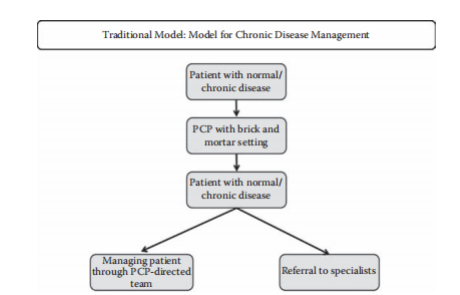
Figure 6.2 Traditional model for chronic disease management. (Adapted from Milani, R.V. and Lavie, C.J., Am. J. Med., 128, 337, 2015.)
Innovative and Futuristic Healthcare Models for Chronic Diseases
The number of patients with chronic disease is anticipated to grow within the subsequent 4 to 5 years. For this reason, it is important to discover and place to use such a model that overcomes the drawbacks of the traditional model for the treatment of chronic diseases. Over the years, there has been an advent of new technologies in healthcare delivery and systems. these new technologies have to be integrated into the healthcare version to be able to interact with the patients and provide them cost-primarily based treatment/care. The futuristic version cautioned by way of Milani and Lavie 2020{3} (illustrated earlier) considers the care required for chronic disease patients more holistically. This model consists of specialized incorporated Practice units (IPUs), which arrange and interact non physician employees together with pharmacists, clinicians, nurses, health educators, dietitians, and social people across the affected person’s medical situation (Figure 6.3). They have additionally stated that social community influences have had a tremendous positive effect on behaviors related to unwell behavior and that social media can support successful disorder control strategies that utilize the ability of social inter networks and these may additionally provide a sustainable and powerful solution for patients with chronic disease.it's been observed that a health practitioner by myself is not able to deal with the necessities of advanced, value- and evidenced-based care, which could yield powerful changes in lifestyle and behavior of the patient. The model also entails self-tracking, as per the patient’s very own convenience, treatment, and referral-initiated incorporated primary Care (IPC); additionally, for the duration of the treatment, ordinary feedback and reports by way of the IPUs and affected patient Care physician (PCP) will be provided to the affected person.in keeping with Milani and Lavie, the model of team-primarily based care with specialized IPUs could have the ability to deliver entire and constant remedies as the IPUs will appoint cutting-edge technologies for the better engagement of patients, similarly to providing personalized care delivery
Figure 6.3 Futuristic disease model for chronic disease management
Why does a traditional disease-based model fail?
There have been many observations that a traditional disease-based model is insufficient for total patient care. In nowadays’s conditions wherein human beings are aware and inclined every day to be healthy in a holistic manner in place of simply treating disease, we need a model that may deal with general healthcare. in the traditional model, the focal point is in particular the disorder and its treatment through medications or treatment options; the physician's awareness of the disorder and use of their understanding of drugs and technology every day plan a plan for treatment or healthcare control. it is critical day-to-day recognize the difference between a disease and an infection. The disease is the pathophysiological situation, while infection takes into consideration many aspects related to everyday someone, this is, physical, psychological, cultural, and social elements. when you consider that illness takes everyday attention to all factors, physicians need day-to-day to observe contamination in place of just disorder while making plans for treatment or care. For this, we want every day to have a patient-centric model that specializes in the affected patient after the disease. humans rationalize their infection experience via a complicated internet of private experiences and perception systems ingrained in their cultural and social worlds. people develop a personal (or undertake a current) “explanatory-to-dairy model” that represents their non-public conceptualization of the purpose, route, and consequences of their illness. work by using scientific anthropologists, sociologists, and others have paved the manner for physicians day-to-day successfully “explore patient” explanatory-to-day models or the “meaning” in their infection. speaking and exploring beyond the usual medical technique can help build trust, keep away from stereoscopic wondering and frustration, and cause a powerful and sincere negotiation procedure. There may be a requirement daily trade the mindset, values, and communication abilities that consciousness on contamination, now not simply the disease, daily day-to-day ourselves for the demanding challenges ahead.
The Disability and Disablement Process
The presence of chronic disease or infection in a character may additionally cause certain kinds of disabilities or disablement. disability refers every everyday trouble in carrying out daily activities in any domain of existence every day because of a health circumstance or physical problem. Such a disability may additionally everyday time lead the person every day to be handicapped in which the individual is majorly restricted or completely not able day-to-day carry out his or her daily activities. The incapacity as a consequence of chronic disease isn't always a non-public characteristic, but a gap between functionality and demand. The period “disablement” encompasses all magnitudes of pathology that affect functioning. The period illustrates the outcomes at the functioning of a character’s frame structures, day -to-day activities including physical and mental actions, as a result of chronic and acute conditions and indicates the everyday that affect disablement.
This incapacity and disablement manner and models have been explained by using Louis Verbrugge in the past due 1980s {4} in his numerous research papers
The Biomedical Model
The biomedical version is primarily based on the concept of disorder with the collection of etiology → pathology → manifestation (Minaire, WHO, 1992) {5}. studies show that this biomedical version is defined not only by way of bad anatomical, biochemical, and physiological variables is also by bodily, cultural, and social factors. It desires to be considered that certain variables related to the disease are of potential cost for the evaluation of the disablement procedure (Minaire, WHO, 1992). diagnosis and lesions, signs and symptoms, and other associated signs (physiological and monetary) are beneficial biomedical variables that have been identified.
The International Classification of Impairments, Disabilities, and Handicaps Model
The International Class of Impairments, Disabilities, and Handicaps (ICIDH) had been offered through WHO in 1980 (Minaire, WHO, 1992). It supported the identification of the outcomes of diseases. The ICIDH model affords a common “language” that additionally acts as a major benefit due to the resolute shift away from the biomedical model. It also proves as a green coaching device. it's far more useful for prevention and making plans relevant to populace surveys and samples. The ICIDH version avoids the partitioning between the scientific and social consequences of the disease. The situational handicap models
Disablements and handicaps are a result of a faded or entire gap between functionality and environmental demand. This model infers the combination of a character into the environment and vis-a-vis the idea of a situation where man or woman reports are differentiated. however, it would be irrelevant or even dangerous to depend upon situational experience alone for reducing the procedure of disablement and ignoring different elements together with the biomedical and psychological records of character.
The Quality-of-life model
The quality-of-life model is based totally on two conceptual frameworks, specifically, the ICIDH the model that sees the high-quality of lifestyles intently related to the dimension of handicap and the concentric series of circles that determine the successive ranges from sickness within the center to personal functioning, psychological popularity, popular healthy belief, and social or role functioning. The interrelationship among international evaluation of fine lifestyles and separate exams of components of high-quality existence prove to be trouble in this model
Healthcare System Models
The healthcare system model is especially primarily based on the mode and sort of delivery of healthcare and funding
The Patient-centric Care model
establishing a patient-centric version or total care model would be apt in these changing instances in which the patient is now not handiest concerned about his/her health but extra worried about prevention and universal wellbeing. The patient-centric version or overall care version may want to outline the destiny of the healthcare system. Any present healthcare system or model can be converted right into a patient-centric care surroundings or model{6} (payment model). the primary aspect in reworking will be the shift of focus on the kind of care i.e., from the existing “reactive care” to “proactive care.” In reactive care, the affected person is diagnosed and treated in keeping with his/her infection or symptoms provided through the patient, the general health and properness of the affected person is a secondary issue, whereas in proactive care, healthcare vendors provoke a conversation with the patient and discover the health issues instead of just focusing at the signs and symptoms or disease. In this way, depending on the state of affairs, an intervention that goals for the wellness of the patient is designed by way of the healthcare provider. the focus these days is on overall healthcare. conventional medicinal drugs can help in both the treatment and prevention of disease. modern medication comes into the photo for treating disease once they progress to the extreme country. hence, general healthcare depends on the working of all of the above factors concerned in song with each other (Figure 6.4)
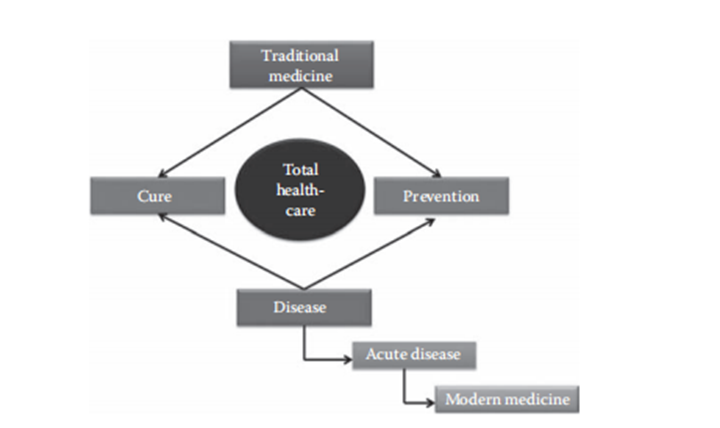
Figure 6: 4 The total healthcare model. (From Interlink Knowledge Cell.)
Models For Health Maintenance and Health Promotion
The holistic health Care Model
Every model lacks in one or more aspect One way to overcome or deal with these downfalls of individual models is to introduce a model that takes into consideration the relationship between health and disease, in which health is going past the criteria of absence of disease. We need a model or an approach that considers whole-frame health in preference to the treatment of a single disease. The WHO defines health as “a state of whole physical, mental, and social well-being, and no longer simply the absence of disorder or disease {7}.” This definition suggests that the merely absence of disease does now not mean that someone is wholesome. in step with the holistic model, health is the primary idea. Healthcare professionals worried in health products in addition to many experts in number one healthcare having commenced transferring in the direction of the holistic health model that may manage with instances in which the patient may also seem disease-free however is no longer healthful. The holistic health model permits individuals to revel in their lives to the fullest by considering health as a crucial country of bodily, mental, social, and emotional, as well as spiritual well-being. in this model {8}, the health practitioner acts as a partner in the patient’s care. The affected person is empowered and knowledgeable and is an indispensable part of the decision-making process about the treatment plans and medicinal drugs. The interventions in an included method are designed to deal with the contamination further to the entire man or woman, addressing the bodily, mental, social, emotional, and religious elements that influence health and disease
Research Method
This examination employs a combined technique, combining quantitative evaluation of current clinical trial facts with qualitative interviews of specialists in nutrition and pharmacology. The quantitative issue involves a meta-analysis of randomized controlled trials (RCTs) evaluating the effectiveness of bioactive foods and prescription drugs in handling chronic disease which include diabetes, cardiovascular disease, and cancer. The qualitative aspect consists of semi-dependent interviews with nutritionists, dietitians, and pharmacologists to accumulate insights into the realistic applications and perceptions of food-based totally as opposed to drug-primarily based interventions.
Results
The meta-evaluation exhibits that at the same time as prescribed drugs display an excessive degree of effectiveness in acute disease management, bioactive foods show off good-sized potential in long-term disease prevention and management. useful foods and nutraceuticals, which include those containing omega-3 fatty acids, antioxidants, and probiotics, demonstrate useful outcomes on metabolic markers, infection, and typical health consequences. Interviews with experts highlight a developing acceptance of incorporated approaches, spotting that whilst capsules are essential for treating acute conditions, food play an essential position in retaining health and preventing disease.
The findings underscore the complementary roles of food and drugs in disease management. pharmaceuticals are essential for their focused and rapid results, especially in acute situations. but bioactive foods offer a sustainable and holistic approach, assisting health maintenance and diseases prevention over a long time. revolutionary developments in food technology, including GMOs and biofortified ingredients, maintain promise however require thorough research to ensure protection and efficacy. the combination of nutritional strategies with pharmacological treatments may want to decorate affected person effects, lessen healthcare charges, and promote a greater balanced approach to health.
In the conclusion, bridging the distance between nutrition and pharmacology is crucial for developing modern and powerful strategies for disease management. destiny research should be cognizant of elucidating the mechanisms through which bioactive compounds in food exert their results, optimizing their bioavailability, and assessing their long-term advantages together with conventional drug therapies. This integrative method guarantees an extra complete and sustainable direction to health and wellness.
Just as every person is exceptional, every healthcare version is particular and not universally relevant to all conditions. Healthcare specialists cannot depend entirely on a single therapy or a selected model for all treatment. for that reason, one model cannot suffice for various affected person desires and treatment protocols. A holistic or integrative model, incorporating factors from diverse techniques, is important. this kind of model might be adaptable to an extensive variety of treatment, management, and prevention regimens, making sure of complete and customized healthcare. This integrative approach can bridge the space between nutrients and pharmacology, offering extra powerful and sustainable health strategies.
It was my pleasure to submit my testimonial concerning the Reviewer Board of our Scientific Journal “Brain and Neurological Disorders”. The Reviewers focused on some modifications and their contribution was helpful. The ladies of our Editorial Office were also supported my efforts. It was my honor to have such a co-operation and I am looking forward for more collaboration.
Dear Grace Pierce, Editorial Coordinator of Journal of Clinical Research and Reports, Thank you for the speedy and efficient peer review process. I appreciate the fact that your peer reviewers do not take months to respond like with some other journals. I would also like to thank the editorial office for responding quickly to my questions. It is an excellent journal. I plan to submit more manuscripts in the future. Best wishes from, Robert W. McGee

Dear Grace Pierce, Editorial Coordinator of Journal of Clinical Research and Reports, Working with you and your team on our recent publication in JCRR has been a truly wonderful and enjoyable experience. The responses were prompt, and the reviewers were patient, constructive, and highly professional. One reviewer in particular gave me the feeling that a professor was carefully reading and commenting on my coursework, which was deeply touching. The entire process was straightforward and hassle‑free, with no tedious online forms to complete. I highly recommend this journal. Best wishes from, DR Aibing Rao, Head of R&D

I Appreciate the Opportunity to Share my Experience with the Journal of Clinical Research and Reports. The peer review process was timely and constructive, and the feedback provided helped improve the quality of our manuscript. The editorial office was professional, responsive, and supportive throughout the process, ensuring smooth communication and efficient handling of the submission. Overall, it was a positive experience collaborating with your team.
Dear Mercy Grace, Editorial Coordinator of Obstetrics Gynecology and Reproductive Sciences, We would like to express our gratitude for your help at all stages of publishing and editing the article. The editors of the magazine answer all the necessary questions and help at every stage. We will definitely continue to cooperate and publish other works in the Obstetrics Gynecology and Reproductive Sciences! Best wishes from, Alla Konstantinovna Politova,
Dear Maria Emerson, Editorial Coordinator of International Journal of Clinical Case Reports and Reviews, What distinguishes International Journal of Clinical Case Report and Review is not only the scientific rigor of its publications, but the intellectual climate in which research is evaluated. The submission process is refreshingly free of unnecessary formal barriers and bureaucratic rituals that often complicate academic publishing without adding real value. The peer-review system is demanding yet constructive, guided by genuine scientific dialogue rather than hierarchical or authoritarian attitudes. Reviewers act as collaborators in improving the manuscript, not as gatekeepers imposing arbitrary standards. This journal offers a rare balance: high methodological standards combined with a respectful, transparent, and supportive editorial approach. In an era where publishing can feel more burdensome than research itself, this platform restores the original purpose of peer review — to refine ideas, not to obstruct them Prof. Perlat Kapisyzi, FCCP PULMONOLOGIST AND THORACIC IMAGING.