Research Article | DOI: https://doi.org/10.31579/2637-8876/022
1 Kurdistan University of Medical Sciences
*Corresponding Author: Ali Khanifar, Master of Medical Microbiology.
Citation: Ali Khanifar. (2021). Evaluation of Mutagenicity of Covid-19 Virus and the effect of Morphine in its Treatment. J. Immunology and Inflammation Diseases Therapy. 4(1); Doi:10.31579/2637-8876/022
Copyright: © 2021 Ali Khanifar. This is an open-access article distributed under the terms of The Creative Commons Attribution License, which permits unrestricted use, distribution, and reproduction in any medium, provided the original author and source are credited.
Received: 11 November 2021 | Accepted: 24 November 2021 | Published: 30 November 2021
Keywords: morphine-covid 19; mutagenicity
Because the covid-19 virus is amazingly mutating, we urgently need a lot of articles in this area. In light of recent events, we have been writing an article on the mutagenicity of the covid-19 virus and treatment with morphine. The covid-19 virus is an exception due to its non-segmented genome, its mutagenicity. Also in this article morphine is a suitable drug because it neutralizes most of the symptoms of the covid-19 virus. Morphine increases immunity against the virus due to the presence of mu3 receptors on the surface of immune cells. Morphine also counteracts symptoms such as shortness of breath, pain, and even diarrhea. Diarrhea has been reported in cases of the covid-19 virus.
Coronavirus (CoV) means a crown, which is taken from the Latin word corona. Coronavirus leads to a wide spectrum of human respiratory tract infections Variable from a mild cold to intense respiratory distress syndrome. Because the Covid 19 virus is present in the coronavirus family, which includes viruses with a single-stranded, positive-strand RNA genome ( Figure 1).

Acute Respiratory Syndrome (SARS) -CoV -2 is the name of a new disease caused by CoV disease and coronavirus disease 2019 (COVID-19) Is a new threat to global health. The covid-19 epidemic began in late December 2019 in Wuhan, China, and then spread rapidly to Southeast Asian countries such as Thailand, Japan, Singapore, and even Iran. The virus has since spread rapidly around the world, including in Europe, such as Spain, Italy, and the United Kingdom, and the United States, and the United Arab Emirates. Outbreaks of covid-19 have been reported by the World Health Organization as a pandemic. The main symptoms of COVID-19 that Involve a person include fatigue, cough, fever, and lower respiratory tract infection signs. The coronaviridae family contains enveloped viruses, positive-strand RNA that are divided into four genera: α, β and γ and also δ. Six coronaviruses in the to disease in humans., including 229E and NL63 of the α genus
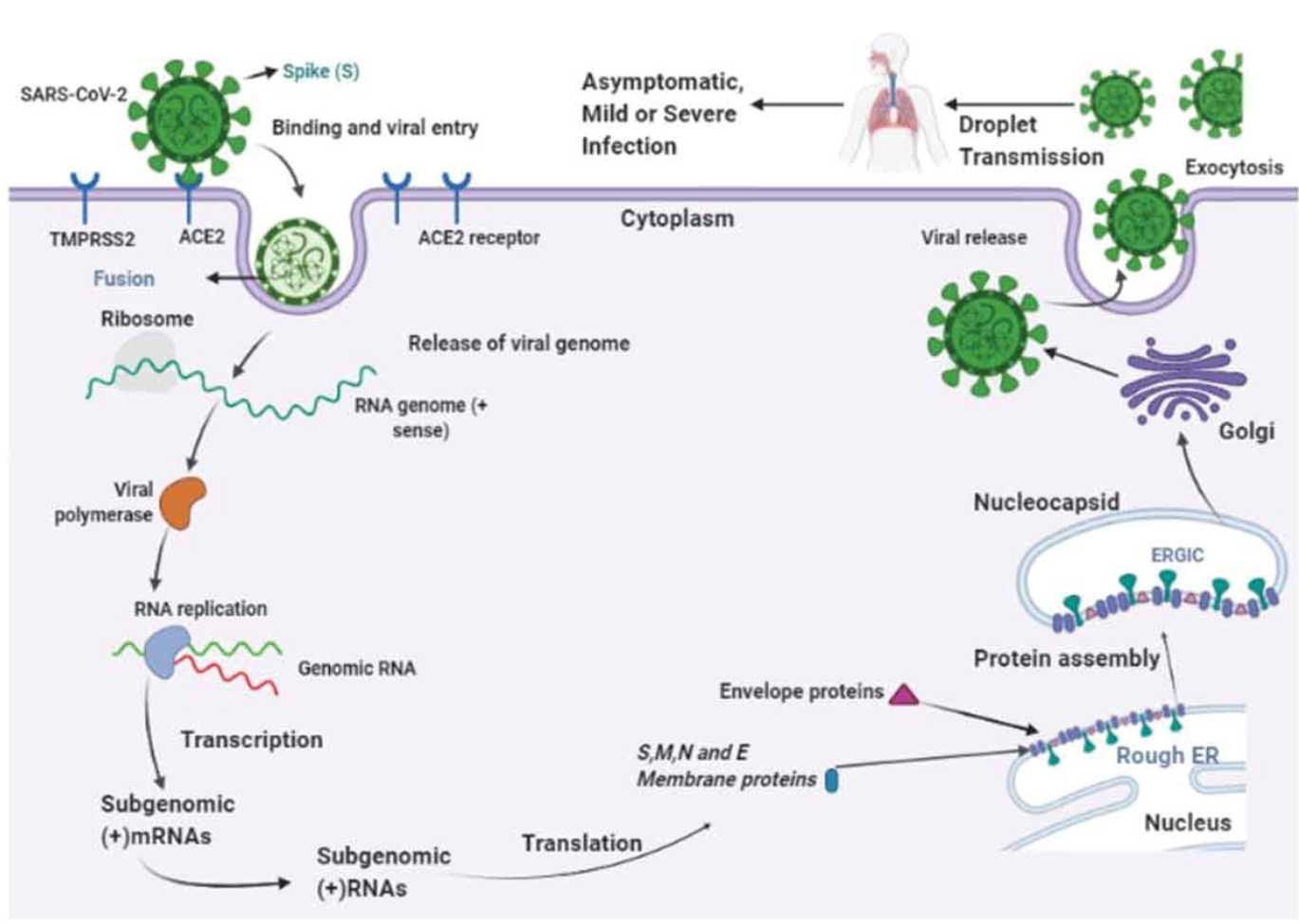
and OC43, HKU1, SARS-CoV, and MERS-CoV of the β genus. Human coronavirus (hCoV) infection Involves the respiratory, nervous systems, and intestinal. The epidemic of severe acute respiratory diseases that occurred in China in 2002-2003 was caused by SARS-CoV-2. MERS-CoV was discovered in 2012 in the Middle East. Both of these coronaviruses are pathogens that infect humans and lead to severe respiratory diseases, Which Possible Develop into severe acute respiratory distress syndrome. According to the experiment by Peng et al. COVID-19 uses the ACE2 receptor as a receptor to enter the cell ( Figure 2); ACE2 is located on the trachea, epithelial cells of the alveoli, serious bronchial glands, bronchi, alveolar monocytes, and macrophages in the respiratory tract. In addition, ACE2 is greatly expressed on the mucosa, such as the lips and mouth, eyelids, nasal cavity. The pathogenic mechanism of COVID-19 is clear, as shown in Figure. 2. This virus enters the target cell through the
ACE2 receptor And then disseminate its single-stranded RNA (ssRNA) into the target cell Then composes with the ribosome in the target cell and is translated to RNA. The RNA replicas copy the ssRNA to produce negative-strand RNA, positive-strand RNA, and RNA fragments, which compose with the ribosome to produce a protein shell. The protein shell and the positive-strand RNA form the new SARS-CoV-2 virions, which are released to infect more target cells.
Of course, it should be noted that among the RNA viruses, viruses with the segmented genome have the highest mutagenicity, such as the influenza virus, which belongs to the orthomyxoviridae family, which contains the segmented RNA genome. However, the mutagenicity of the Covid-19 virus is considered as an exception among RNA viruses that have a non-segmented genome. The only reason for the persistent mutagenesis of the covid-19 virus is that the Covid-19 virus can hide in the cells, where it fuses with the cell genome to produce a genome different from the genome that first entered the body, resulting in a mutation. Because some viruses can hide in the host cell and resume their activity immediately after the weakening of the immune system. The Covid-19 virus, like these viruses, can hide in the host cell, and after combining with part of the host cell genome, mutations occur in the virus. It should be noted that this mutagenicity has manifested itself in people with weak immune systems and they do not necessarily have to travel to the rest of the world to catch it.
Morphine :
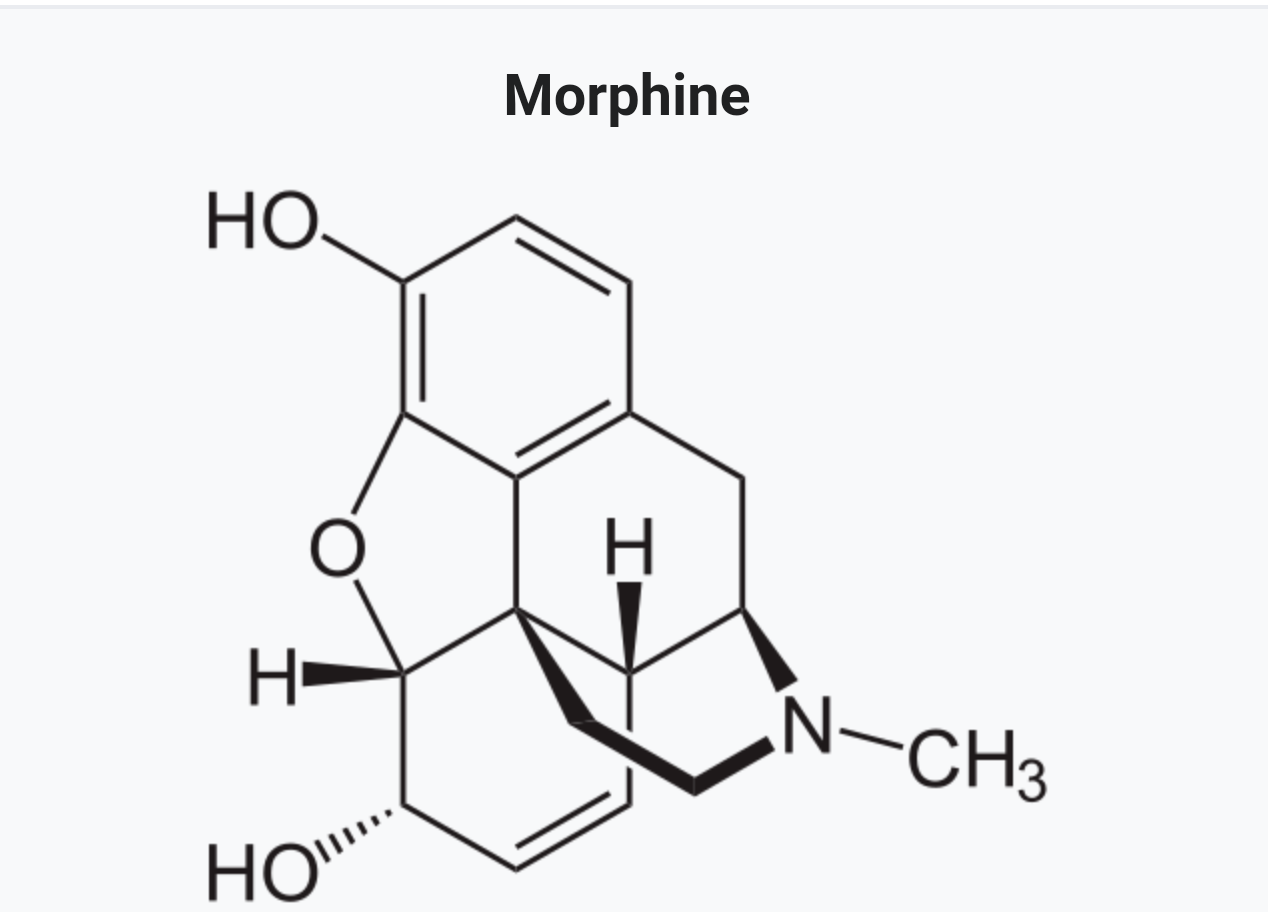
Morphine is one of the best candidates for Covid-19 virus treatment because morphine eliminates most of the symptoms caused by the Covid-19 virus ( Figure 3 ). Friedrich Sertner, a German pharmacist, was the first to isolate Morphine between 1803 and 1805. It is thought to be the first isolation of an active ingredient from a plant. Morphine was marketed in 1827 by Merck. Morphine use increased dramatically between 1853-1855 after the Innovation of the hypodermic syringe. Sertürner named the substance morphium from the Greek god of dreams, Morpheus Because it creates a desire to sleep.
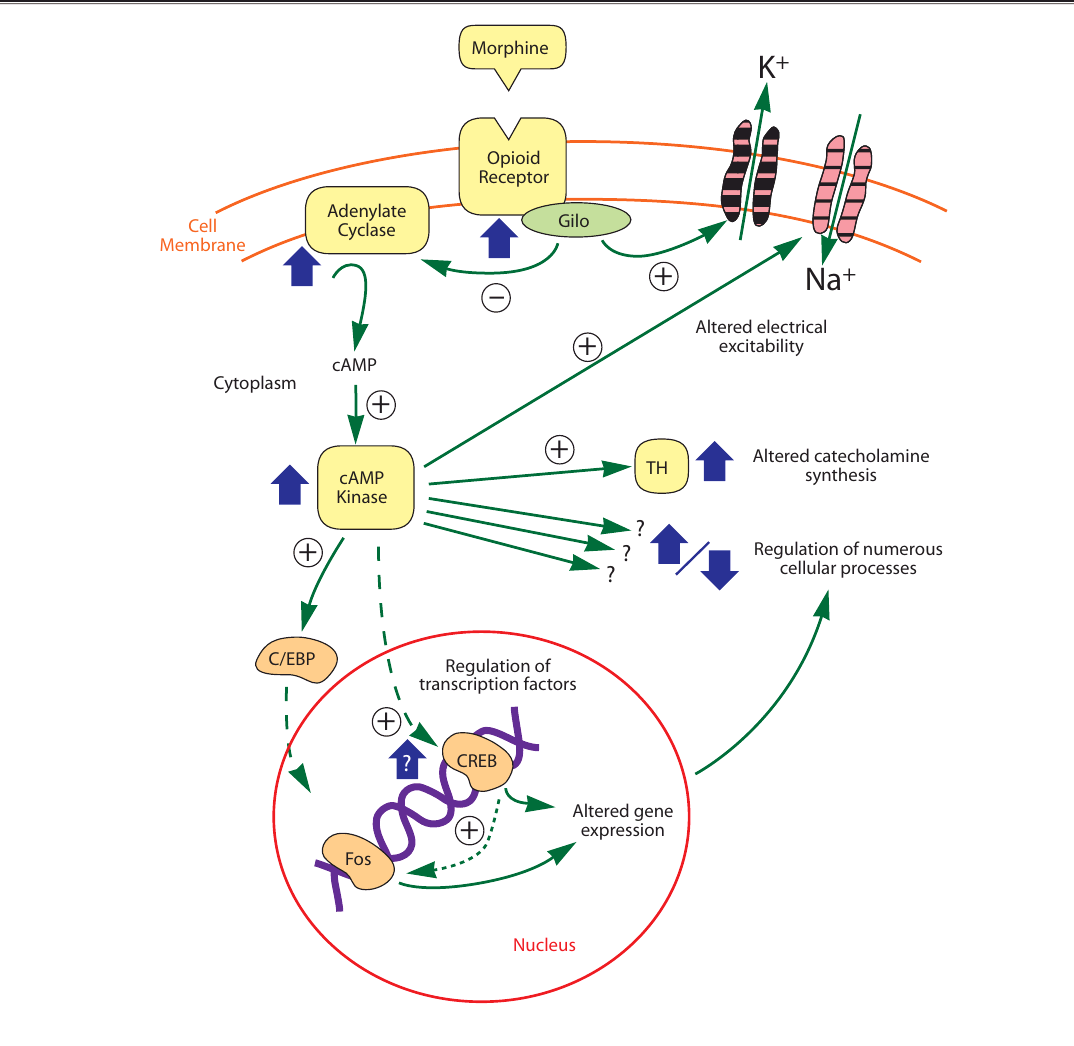
Initially, morphine has applications for treating acute and chronic severe pain. The duration of morphine analgesia is about 3 to 7 hours. Side-effects of constipation and nausea are infrequently lead to stop treatment. It has applications for pain due to labor pains and myocardial infarction. So, there are concerns that morphine Likely increases mortality in the event of non-ST elevation myocardial infarction. Morphine has applications for acute pulmonary edema. Morphine is also used to reduce the sign of shortness of breath Caused by cancer and non-cancerous. In the Conditions of breathlessness at Relaxation or on at least Pressure from conditions such as advanced cancer or end-stage cardiorespiratory diseases, regular, low-dose sustained-release morphine dramatically reduces breathlessness safely, with its benefits maintained over time. Morphine activates the mu-opioid receptor(MOR) ( Figure 4 ) . mu receptors are present in the medial thalamus and brainstem. Mu receptors are responsible for respiratory depression, supraspinal analgesia, sedation, euphoria, decreased gastrointestinal motility, and physical dependence.
Scientists have lately discovered that immunocytes contain specific receptors for morphine, They can bind to morphine and some opiate alkaloids, but in principle with no or very low desire for the naturally occurring endogenous opioid peptides or peptide analogs. The mu 3 receptor exists in invertebrate immunocytes and even in human peripheral blood monocytes such as macrophages. Lately, the mu 3 receptor has been Discovered in defined macrophage cell lines and human peripheral blood granulocytes. lastly, mu 3, a receptor similar or close relationship opiate alkaloid-selecting has been characterized to exist in neuroblastoma and the neuronal hybrid cell line. Recent studies have shown that immune cells receptor mediates between the inhibitory efficacy of morphine and cellular chemotaxis. In vivo Prescribed of morphine has been indicated to reduce the delayed-type hypersensitivity reaction, antibody production, T-cell antigen expression, cytotoxic T-cell activity, neutrophil activity, and NK cell activity. While the functional binding of this receptor in neurons is unclear, it is hypothesized that the receptor might be mediating the effects of opioids on nerve Distinction and cell division as well as neurotransmission. Mu 3 receptor for the nervous and immune system might be the original location of Activity for endogenous morphine or morphine-like Materials. In addition, the mu 3 receptor supplies an extra Medicinal location for that are exogenously Prescribed opioid alkaloids drugs. Also, the mu 3 receptor is suggested to be a significant neuro-immune linkage. This system may perform an important role in types of Reactions Regarding the immune system, including the Reaction of the organism to stress, infection, and malignant Conversion.
By taking morphine, we find that it neutralizes at least 4 to 5 of the symptoms of Covid 19, including severe cough, severe pain, chronic diarrhea, and even stress if the person has Covid 19. It is also used in the treatment of acute pulmonary edema and reduces the symptoms of shortness of breath due to the covid-19 virus. Infection with the covid-19 virus increases heart rate and respiration rate than with morphine, not only do the symptoms listed above go away, but there is also a relative calm that slows the heart rate and, most importantly, reduces the rate of respiration. Morphine creates a competitive environment with the virus. The slower the rate of respiration and blood flow, the more immune cells can detect it. It should be noted that people who survive Covid 19 have a higher level of relaxation because our immune system can detect the virus by reducing Blood flow velocity and people who are unable to do so are prescribed morphine will do this for them. Because morphine has a high percentage of addiction, it should not be used more than twice. Also, in older people with weakened immune systems, in addition to morphine, it should be given from the serum of people rescued from Covid 19, which contains antibodies.
1. CoV: Coronavirus
2. HCoV: Human coronavirus
3. ssRNA: single-strand RNA
4. ACE2: angiotensin-converting enzyme 2
5. ER: Endoplasmic Reticulum
6. MOR: mu-opioid receptor
7. cAMP: cyclic AMP
Not applicable.
Consent to publication :
This manuscript is published with the aim that the Covid-19 virus is transmitted rapidly in the world and we are looking for a treatment for this disease.
Availability of data and materials :
The comments made in this article are purely the opinion of the author and so far no experiments have been performed on either humans or animals.
Competing interests :
The author declares no competing interests.
Funding :
Not applicable.
Authors' contributions :
Not applicable.
Acknowledgments:
I thank Maedeh Khanifar for helping me write this article.
It was my pleasure to submit my testimonial concerning the Reviewer Board of our Scientific Journal “Brain and Neurological Disorders”. The Reviewers focused on some modifications and their contribution was helpful. The ladies of our Editorial Office were also supported my efforts. It was my honor to have such a co-operation and I am looking forward for more collaboration.

Dear Grace Pierce, Editorial Coordinator of Journal of Clinical Research and Reports, Thank you for the speedy and efficient peer review process. I appreciate the fact that your peer reviewers do not take months to respond like with some other journals. I would also like to thank the editorial office for responding quickly to my questions. It is an excellent journal. I plan to submit more manuscripts in the future. Best wishes from, Robert W. McGee

Dear Grace Pierce, Editorial Coordinator of Journal of Clinical Research and Reports, Working with you and your team on our recent publication in JCRR has been a truly wonderful and enjoyable experience. The responses were prompt, and the reviewers were patient, constructive, and highly professional. One reviewer in particular gave me the feeling that a professor was carefully reading and commenting on my coursework, which was deeply touching. The entire process was straightforward and hassle‑free, with no tedious online forms to complete. I highly recommend this journal. Best wishes from, DR Aibing Rao, Head of R&D

I Appreciate the Opportunity to Share my Experience with the Journal of Clinical Research and Reports. The peer review process was timely and constructive, and the feedback provided helped improve the quality of our manuscript. The editorial office was professional, responsive, and supportive throughout the process, ensuring smooth communication and efficient handling of the submission. Overall, it was a positive experience collaborating with your team.

Dear Mercy Grace, Editorial Coordinator of Obstetrics Gynecology and Reproductive Sciences, We would like to express our gratitude for your help at all stages of publishing and editing the article. The editors of the magazine answer all the necessary questions and help at every stage. We will definitely continue to cooperate and publish other works in the Obstetrics Gynecology and Reproductive Sciences! Best wishes from, Alla Konstantinovna Politova,

Dear Maria Emerson, Editorial Coordinator of International Journal of Clinical Case Reports and Reviews, What distinguishes International Journal of Clinical Case Report and Review is not only the scientific rigor of its publications, but the intellectual climate in which research is evaluated. The submission process is refreshingly free of unnecessary formal barriers and bureaucratic rituals that often complicate academic publishing without adding real value. The peer-review system is demanding yet constructive, guided by genuine scientific dialogue rather than hierarchical or authoritarian attitudes. Reviewers act as collaborators in improving the manuscript, not as gatekeepers imposing arbitrary standards. This journal offers a rare balance: high methodological standards combined with a respectful, transparent, and supportive editorial approach. In an era where publishing can feel more burdensome than research itself, this platform restores the original purpose of peer review — to refine ideas, not to obstruct them Prof. Perlat Kapisyzi, FCCP PULMONOLOGIST AND THORACIC IMAGING.