Review Article | DOI: https://doi.org/10.31579/2690-4861/319
Bhavan’s Hazarimal somani college, University of Mumbai, Mumbai, Maharashtra, India.
*Corresponding Author: Sai P. Katke, Bhavan’s Hazarimal somani college, University of Mumbai, Mumbai, Maharashtra, India.
Citation: Sai P. Katke, (2023), A Review: Applications of Chemicals on the Health Aspects of Seborrheic Dermatitis in Coastal Tropical Region, International Journal of Clinical Case Reports and Reviews, 14(2); DOI:10.31579/2690-4861/319
Copyright: © 2023, Sai P. Katke. This is an open-access article distributed under the terms of the Creative Commons Attribution License, which permits unrestricted use, distribution, and reproduction in any medium, provided the original author and source are credited.
Received: 13 June 2023 | Accepted: 26 June 2023 | Published: 05 July 2023
Keywords: knee osteoarthritis; goldic; intra-articular injection; vas; womac
Background:
Knee osteoarthritis (KOA) is one of the most common degenerative diseases that can lead to disability and pain. The degenerative nature of this condition cannot be reversed or healed by any currently available treatments.
Recently, there has been an upcoming interest in treating degenerative tissue disorders with minimally invasive autologous blood products. Autologous blood was preconditioned with gold particles to encourage the production of various proteins in patients’ blood.
This current study investigated the safety and efficacy of pre-conditioning autologous blood with gold particles (GOLDIC®) in patients with severe knee osteoarthritis (KOA).
Case presentation
We report a case in which four intra-articular GOLDIC® injections were used to treat knee osteoarthritis. After a week, physiotherapy was recommended. Before and three weeks after the injections, she was assessed for her weight, the Visual Analog Scale (VAS), and the Western Ontario and McMaster University Osteoarthritis Index (WOMAC) score.
GOLDIC® treatment resulted in significant weight, VAS, and WOMAC score improvements without serious side effects.
Conclusion
Due to the one-time blood harvesting and only four injections, the initial results demonstrated that the treatment plan is safe, less expensive, patient-friendly, and more successful at achieving compliance. This GOLDIC® treatment can significantly decrease pain and improve knee capability with overall satisfaction over a significant period.
To fully validate the real potential of GOLDIC® in heterogeneous patient populations and to compare these promising results to other blood-based platforms, future randomized-controlled trials with long-term follow-up are required, despite the promising early clinical results.
Seborrheic dermatitis is a common skin condition that mostly affects the scalp. It causes scaly patches, itchy skin, and chronic dandruff. It primarily affects the oily areas of the body, such as the cheeks, sides of the nose, brows, ears, eyelids, and chest. This ailment can be annoying, although it is not contagious and can cause hair loss at first. Seborrheic dermatitis may resolve spontaneously. To reduce symptoms and prevent flare-ups, you may need to use medicated shampoo or other things on a long-term basis. Seborrheic dermatitis is also known as dandruff, seborrheic eczema, and seborrheic psoriasis. It is known as cradle cap when it appears in infants. Seborrheic dermatitis is a common chronic inflammatory skin condition that affects 11.6% of the general population and up to 70% of infants in their first few months of life. It can have an effect on the psyche and quality of life of people who are in a chronic relapsing cycle. Chronic skin disorders can have both physical and emotional consequences on one's life, such as discomfort, stigma, loss of self-esteem, and limitations in social activities. Some have a similar detrimental impact on quality of life to cardiovascular disease.
Scalp pruritus and seborrheic dermatitis scales might contribute to social isolation. It has been reported that exposing these people to stressful conditions worsens their depressive symptoms. However, there has been little investigation into the clinical features of the illness and the patients' quality of life. Few studies have been conducted in temperate regions, where patient clinical characteristics may differ from those seen in tropical countries. Seborrheic dermatitis is a common chronic inflammatory skin condition that can impair a patient's quality of life. In temperate countries, the harsh environment (low temperature and humidity in winter) on the skin barrier is responsible for the high prevalence of seborrheic dermatitis.
Layout of the research
A cross-sectional survey of adults suffering from seborrheic dermatitis was conducted. The inclusion criteria were as follows: be at least 18 years old, have a diagnosis of SD, and sign informed consent.
Sociodemographic characteristics
Patients were asked about their age, gender, disease duration, BMI, relationship status, education level, occupation, smoking and alcohol consumption, exercise routines, hospitalizations, and private insurance status.
Data on Urban Air Quality
The term "urban air quality" refers to how "clean" the air is inside cities with a density, population, and level of activity that are commonly considered "urban." In general, urban air quality differs from rural air quality because there are more concentrated sources and the ability of pollutants in the air to disperse is limited by physical constraints in the urban environment.
Urban ecosystems account for roughly 78% of all carbon emissions and significant airborne pollutants, affecting more than 50% of the world's population. Although air pollution affects all regions, there is significant regional variation in air pollution levels. With rising hot and humid temperatures in September and medium rainfall, Seborrheic dermatitis is becoming an important element in the spread of infections. During such proliferation, or the peak of infections, many chemical interactions occur.
Survey: Conducted by the writers listed in the references.
Treatments: To minimise oil and skin cell build-up, consider regular cleaning with a soft shampoo first. If that doesn't work, consider using a medicated dandruff shampoo. Some people can use a medicated shampoo two to three times per week, with ordinary shampooing on other days if necessary. [8] [www.mayoclinic.org/diseases-conditions/dandruff/diagnosis-treatment].
"SD was diagnosed in 5316 patients (5.9% of the outpatient clinic) during the study period. There were 2721 men (51.2%) and 2595 women (48.8%), with a mean age of 35.915.1 years. SD frequency was 7.3% in December, 7.1% in February, 6.7% in November, and 6.6% in January, with June (3.8%) and July (3.9%) representing the lowest number of patients. Despite significant differences in average temperature, the frequency of SD was similar in the autumn and winter seasons." [1].
"The most common cause found to worsen seborrheic dermatitis (34.9%) was seasonality, particularly hot temperature. The overall DLQI score ranged from 0 to 27, with a mean (SD) of 8.1 (6.0). There was no statistically significant difference between the two DLQI groups in terms of disease duration, level of involvement, symptoms, or course." [3].
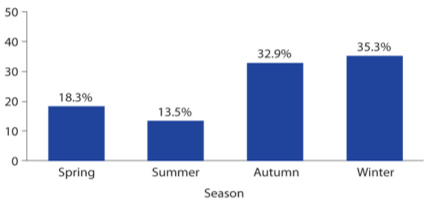
Figure 1: Distribution of seborrheic dermatitis with respect to seasons.
Symptoms may appear and disappear, and they may be more severe at certain seasons (eg, during cold weather). Flares can also happen during stressful times, hormonal changes, or illness. Certain neurological diseases, such as Parkinson's disease, can increase the likelihood of getting seborrheic dermatitis.
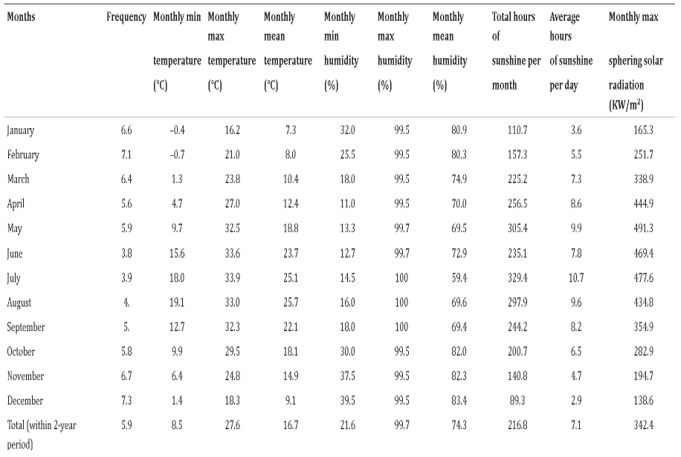
Table 1: Seborrheic dermatitis frequency by months with respect to climate database findings.
[1] [Akbulut TO, Suslu H, Atci T. Is the Frequency of Seborrheic Dermatitis Related to Climate Parameters? Sisli Etfal Hastan Tip Bul. 2022 Mar 28;56(1):91-95. doi: 10.14744/SEMB.2021.67503. PMID: 35515978; PMCID: PMC9040311].
The most SD diagnoses were made in December, with 670 (7.3%), followed by February (608, 7.1%), November (659, 6.7%), and January (596, 6.6%). June (199, 3.8%) and July (259, 3.9%) had the lowest SD frequency. The distribution of SD cases was as follows according to the seasons: 35.3% were discovered during the winter, 32.9% during the autumn, 18.3% during the spring, and 13.5% during the summer. Table 1 shows the frequency of SD with respect to climate data, including temperature (°C), humidity (%), average sunshine duration (hours/day), and average UV index (watts/m2) by month, as well as the frequency of SD with respect to climate database findings.[1].
1. Coal Tar
It is a well-known ingredient for its anti-inflammatory and antimicrobial properties. Thus, shampoos with Coal Tar soothes inflamed and itchy scalps. Basically, it slows down the rate of flaking of the scalp skin cells. Coal tar might make the hair photo-sensitive. Thus, it is always suggested to consult with a dermatologist before choosing a shampoo with this component.
Tar-based shampoos (Neutrogena T/Gel, Scalp 18 Coal Tar Shampoo, others). Coal tar slows how quickly skin cells on your scalp die and flake off. If you have light-coloured hair, this type of shampoo may cause discoloration. It can also make the scalp more sensitive to sunlight.
2. Pyrithione Zinc
Another active component that is often found in the best medicated anti dandruff shampoos. It is widely found and this makes the product a bit inexpensive. It is a powerful tool to battle against Malassezia fungus. Pyrithione Zinc is quite popular among dermatologists because of its gentle nature.
Pyrithione zinc shampoos (DermaZinc, Head & Shoulders, others). These contain the antibacterial and antifungal agent zinc pyrithione.
3. Salicylic Acid
Surprisingly, this component is not only effective around acne but also around dandruff. It is amazing to fight off Yeast, another common cause of dandruff. Salicylic Acid is often found in Clarifying Shampoos as it can clear scalp build-up which is an indirect cause of dandruff for some people. If you want a healthy solution for your oily scalp, then choose an anti-dandruff shampoo with Salicylic Acid. It is not recommended for people with dry skin as they might feel the effect irritating.
Shampoos containing salicylic acid (Jason Dandruff Relief Treatment Shampoo, Baker P&S, others). These products help eliminate scaling.
4. Selenium Sulfide
It is a Sulfur-derived component that can control itchy dandruff flakes. Don’t worry! This active ingredient does not come up with the rotten egg smell of Sulfur. Due to its anti-inflammatory properties, it can soothe the itchy and irritating scalp. Shampoos with Selenium Sulfide are easily available in medical stores.
Selenium sulfide shampoos (Head & Shoulders Intensive, Selsun Blue, others). These contain an antifungal agent. Use these products as directed and rinse well after shampooing, as they can discolour the hair and scalp.
5. Ketoconazole
An anti-fungal active ingredient that can slow down the growth of yeast. Just like Selenium Sulfide, shampoos with Ketoconazole are easily available too. A part from treating the root cause of dandruff, this component can also treat hair loss problems too.
Ketoconazole shampoos (Nizoral Anti-Dandruff). This shampoo is intended to kill dandruff-causing fungi that live on your scalp.
Seborrheic dermatitis, however moderate and asymptomatic, can have a significant influence on one's quality of life. Higher DLQI scores were strongly linked with youth, female gender, and scalp lesions. According to our findings, environmental parameters such as low temperature, low UV index, and low humidity are significant in increasing the chance of SD development. These findings confirm earlier research by demonstrating that SD frequency may be increased in climate conditions favourable to the proliferation of Malassezia species.
Nearly half of SD infected people in tropical areas reported severe emotional issues. The severity of the disease, BMI, dermatologic hospitalisation, and ambient PM 10 levels are all risk factors for QoL impairment in SD patients. These consequences are concerning and demand public health attention in the management of SD disease. Those suffering from SD in a hot, humid, tropical climate face significant consequences in many aspects of everyday life. They discovered that disease severity, dermatologic hospitalisation, and PM 10 level all had a negative impact on patients' quality of life. These ramifications are concerning. Future SD mental health treatment may place a greater emphasis on public health concerns for SD disease management and its associated environmental elements.
Dear Editorial Team, Clinical Medical Reviews and Reports. My experience with the journal was highly positive. The peer-review process was rigorous, constructive, and completed in a timely manner. The reviewers provided valuable comments that helped improve the quality and clarity of our manuscript. The editorial office was professional, responsive, and supportive throughout all stages of the publication process. Communication was clear and efficient, and any questions were addressed promptly. Overall, I found the journal to maintain high scientific standards and an excellent publication workflow. I would be pleased to consider submitting future work to this journal. Best wishes from, Elena Popa.

It was my pleasure to submit my testimonial concerning the Reviewer Board of our Scientific Journal “Brain and Neurological Disorders”. The Reviewers focused on some modifications and their contribution was helpful. The ladies of our Editorial Office were also supported my efforts. It was my honor to have such a co-operation and I am looking forward for more collaboration.

Dear Grace Pierce, Editorial Coordinator of Journal of Clinical Research and Reports, Thank you for the speedy and efficient peer review process. I appreciate the fact that your peer reviewers do not take months to respond like with some other journals. I would also like to thank the editorial office for responding quickly to my questions. It is an excellent journal. I plan to submit more manuscripts in the future. Best wishes from, Robert W. McGee

Dear Grace Pierce, Editorial Coordinator of Journal of Clinical Research and Reports, Working with you and your team on our recent publication in JCRR has been a truly wonderful and enjoyable experience. The responses were prompt, and the reviewers were patient, constructive, and highly professional. One reviewer in particular gave me the feeling that a professor was carefully reading and commenting on my coursework, which was deeply touching. The entire process was straightforward and hassle‑free, with no tedious online forms to complete. I highly recommend this journal. Best wishes from, DR Aibing Rao, Head of R&D

I Appreciate the Opportunity to Share my Experience with the Journal of Clinical Research and Reports. The peer review process was timely and constructive, and the feedback provided helped improve the quality of our manuscript. The editorial office was professional, responsive, and supportive throughout the process, ensuring smooth communication and efficient handling of the submission. Overall, it was a positive experience collaborating with your team.

Dear Mercy Grace, Editorial Coordinator of Obstetrics Gynecology and Reproductive Sciences, We would like to express our gratitude for your help at all stages of publishing and editing the article. The editors of the magazine answer all the necessary questions and help at every stage. We will definitely continue to cooperate and publish other works in the Obstetrics Gynecology and Reproductive Sciences! Best wishes from, Alla Konstantinovna Politova,